 LEGENDS
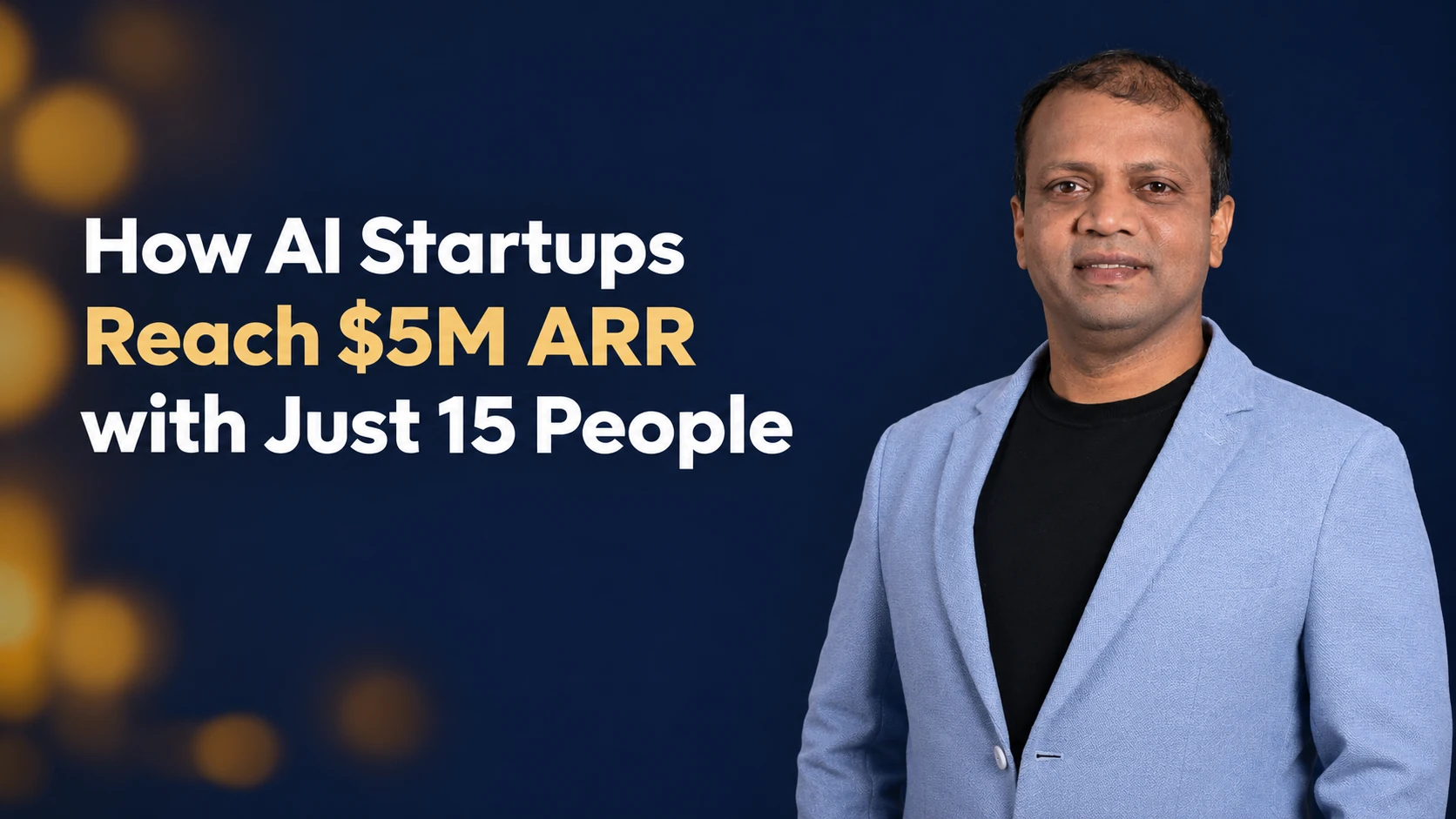
A software company reaching $5 million in annual recurring revenue with a team of 10–15 people would once have seemed unlikely. In Radhesh Kanumury’s research into lean AI startups, it was the kind of business he wanted to understand.
His team studied around 25 companies to explore what helped them grow with so few employees. At Legends InvestHack #10, Radhesh Kanumury, Managing Partner at Suvan Ventures, discussed the findings and the questions they raise for founders and investors.
AI gives a small team more capacity to build. Turning that capacity into a business still requires a clear understanding of the customer, a product that solves a meaningful problem and a way to sell it.
From a blast furnace to enterprise software
Radhesh began his career as a blast furnace foreman. For around three years, he managed people and monitored the process of producing molten iron — physically demanding work where operating conditions and timing mattered.
As the internet economy developed, he wanted to become part of it. He studied for business school entrance examinations, completed his management education in Bombay and joined IBM.
His early work involved implementing enterprise resource planning systems, particularly for manufacturers. That meant understanding how a business operated before deciding how software could improve it.
He later became a software architect, bringing different technologies together to meet enterprise requirements. After around 12 years in that role, he took on IBM’s India accelerator programme and began working with startup founders.
That experience led him towards investing. He helped establish ARKA Venture Labs, focused on early-stage B2B companies operating across India and the US. Today, at Suvan Ventures, he backs early-stage AI-first SaaS companies with global ambitions.
Where an AI product becomes valuable
When Radhesh evaluates an AI company, he looks closely at how its technology works in the customer’s environment.
Does the application understand the context in which it operates? How effectively does it retrieve and use relevant information? Has it been developed to solve a specific problem in a sector such as manufacturing, healthcare or financial services?
He also considers how deeply the product fits into an organisation’s workflows. A tool that becomes part of everyday operations has a different relationship with its customer from one used occasionally for an isolated task.
These are some of the factors he considers when assessing whether a product can retain its value as the underlying AI models improve.
For companies building on those models, better capabilities can strengthen their own applications. The challenge is to translate those improvements into something useful enough for an enterprise to adopt and continue using.
A small team still needs a way to win customers

The lean AI companies in Radhesh’s research showed how much a small team can now achieve. But he was equally clear about the importance of go-to-market execution: how a company reaches customers, explains its value and converts interest into revenue.
He recalled early-stage founders who stood out through their ability to describe a deep enterprise problem and demonstrate a convincing solution. Their presentations had the clarity of a conversation with a prospective buyer.
That ability matters when customers already have alternatives, including building a solution themselves. Founders need to understand what makes their product worth choosing, whether that comes from its technology, service, market focus or approach to distribution.
Start with design partners
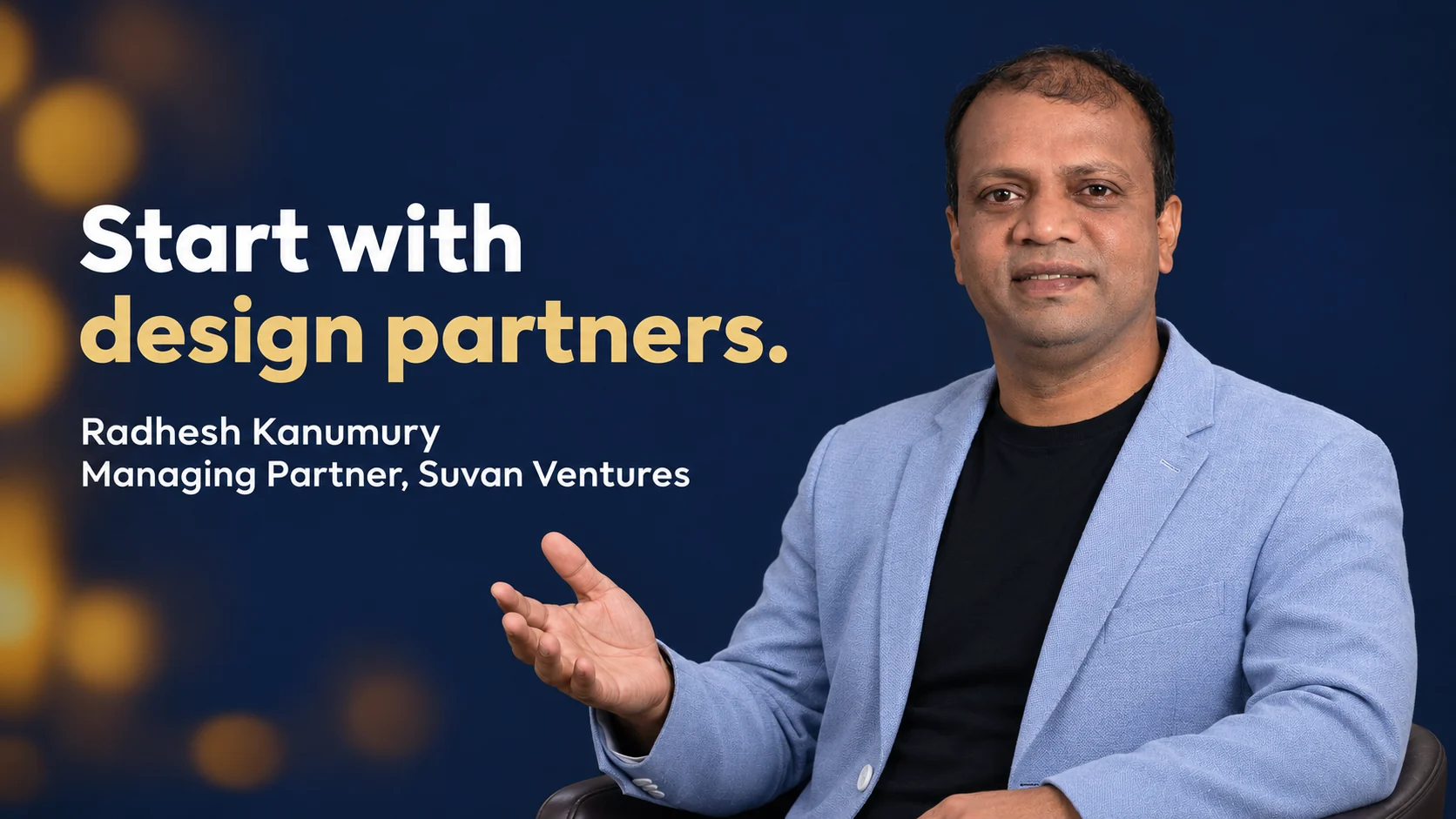
Radhesh’s advice for founders developing an enterprise product was direct:
“Start with design partners.”
These are prospective customers who work with a startup while the product is being developed. They bring practical knowledge of the problem, the organisation and the conditions in which a solution would need to work.
The arrangement can also establish a path towards a commercial relationship: if the startup successfully solves the agreed problem, the partner may become a paying customer.
Radhesh has seen founders build around assumptions that sit far from how enterprises actually operate. Working with a representative customer gives them a way to test those assumptions while they can still change the product.
Working together before investing
Sometimes Radhesh sees a founder with strong domain knowledge and a promising product who still needs help with positioning, customer acquisition or investment readiness.
In those cases, Suvan may work with the founder for a few months before deciding whether to invest. The work gives the company time to address those gaps and lets both sides understand how they work together.
A founder’s willingness to take feedback matters in that process. Technical knowledge provides a foundation; the ability to learn and make changes helps the business move forward.
Across the conversation, Radhesh returned to the practical work behind growth: understanding an enterprise problem, developing with customers and building a credible route to market. Those demands remain even as AI makes it possible to achieve more with a smaller team.
Thank you, Radhesh, for sharing your experience with Legends.