 LEGENDS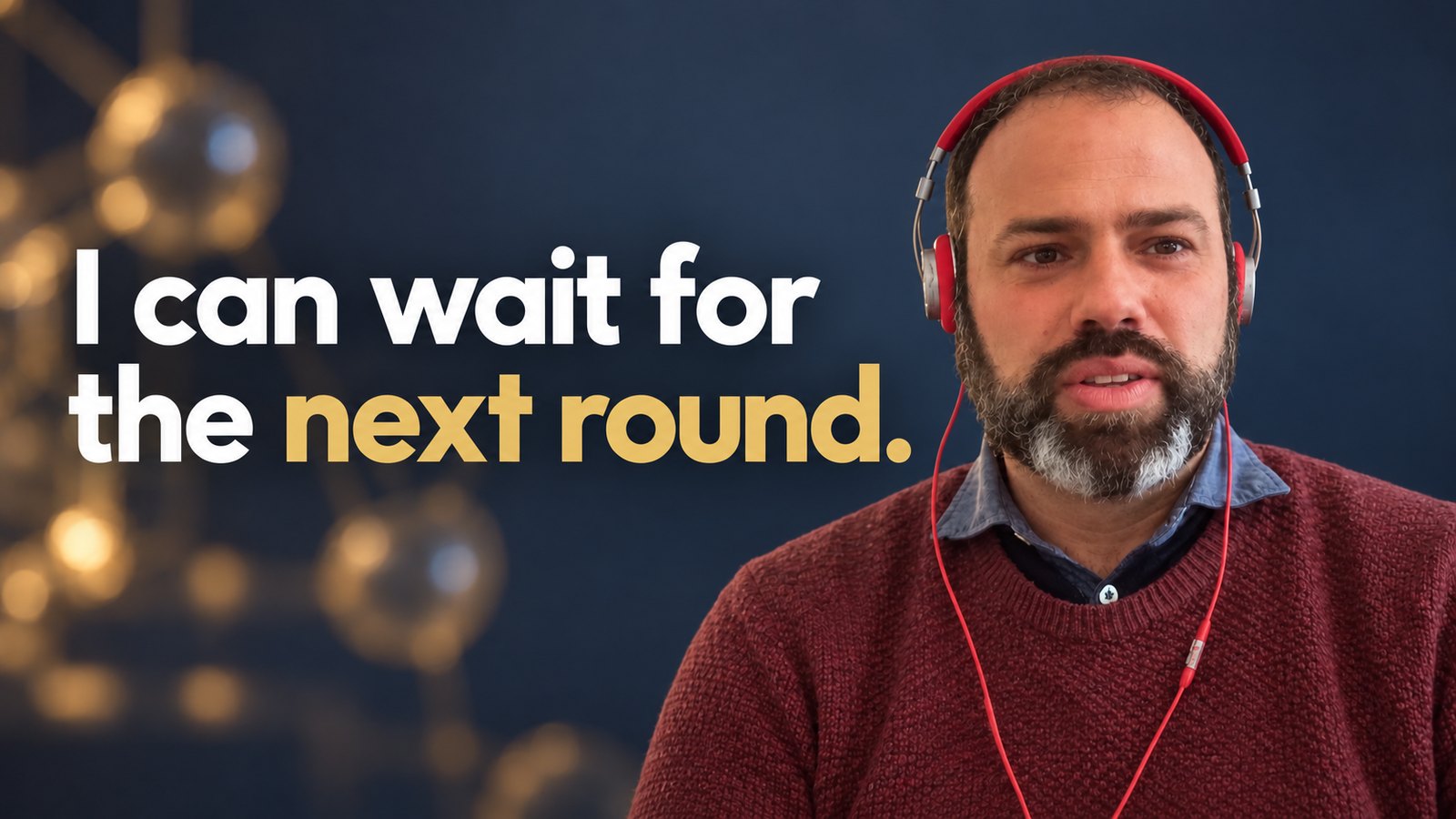
A company comes to us towards the end of its fundraising round. It needs an investment decision within a month. If we invest, we may be partners for ten, twelve or fifteen years. Why should the time left in that round determine how long we have to understand the relationship?
As a family office, we have the flexibility to sit out a round. We can invest now, but we can also consider the next one. With a fund, we might consider a later vintage. I feel fortunate to have that choice.
This is sometimes described as taking a year or more to make a decision. That misses the point. There is no fixed waiting period. The point is that we do not have to invest within the window in which we first meet someone. Sometimes the most useful information arrives after that window has closed.
The first filter is fit
My scientific background becomes important quite quickly, but the first filter is simpler: has the person approaching us paid attention to what we invest in?
Our focus is public. It is on my LinkedIn profile, and I talk about it in interviews and conversations like this one. Even so, I would estimate that 70–80% of our inbound opportunities are outside that focus. A little research would answer the question before either side spends much time on it.
There is a big difference between asking us to invest in a social media company when we do not invest in social media, and acknowledging that it is outside our focus before asking whether we know someone relevant. The second approach shows that the person has done their homework. It starts a different conversation.
An opportunity can be good and still be wrong for a particular investor. That is worth understanding early.
Then I want to understand the logic
Once something looks relevant, I start thinking more like a scientist. What is the logic of this company? How are the founders thinking about the problem?
For many businesses, the basic sequence is straightforward. There is a problem. A defined group of people has that problem. The company can solve it for them. If it does, those people will pay.
Each part needs a clear explanation: the problem, the customer, what solving it means, and why payment follows. It is surprisingly difficult to find all of those answers stated clearly in some company materials. Missing answers can reveal that the founders have not fully understood part of the business themselves.
If the logic does not make sense, it becomes difficult to believe in the opportunity. And belief matters. I have rarely seen someone who fundamentally does not believe in a business turn into a committed believer. I usually suggest starting with the people who already understand and believe in what the company is trying to do.
The graph has to support the claim

I started working in laboratories while I was still in high school. At UC Berkeley, I studied biochemistry and molecular toxicology, and worked in both laboratory analysis and science education. Later, I found my way into entrepreneurship, finance and the commercialisation of science. Those experiences still shape the questions I ask.
Biotech is a particularly revealing area because I often want the company’s story to be true. If a technology does what its founders say it can do, it may save lives or help people live longer. It is easy to become hopeful about that possibility.
Then I start looking at the technology, the trials and how the studies were carried out. Sometimes the story begins to develop holes. I have seen companies make claims about their data that their own graphs did not support. They might describe a result as significant when the graph does not appear to justify that conclusion.
That is disappointing precisely because the original promise was so compelling. But the promise cannot replace the work of checking what has actually been demonstrated. The science underneath an exciting story can fall apart very quickly when examined closely.
What happens after this round matters

With a new founder or fund manager, one of the things we are assessing is the relationship itself. How does this person engage with us? What happens when we say we will not invest in the current round, but might consider a later one?
I would say 80–90% of opportunities, whether companies or funds, tend to disappear at that point. For us, that is revealing. We are interested in a long-term relationship, and we want to see how it develops when there is no immediate cheque at the end of the conversation.
The time between rounds also lets us compare intentions with execution. During the fundraise, the team said it would do certain things. Did it do them? Is it communicating with us? How well does it deliver on what it said it would deliver?
Those questions are difficult to answer during the first few interactions of a fundraising process. Over time, they become easier to assess.
The hardest thing to establish may be whether we really want the same things. Shared goals are relatively easy to claim in a short conversation. It takes longer to understand whether that agreement holds. This is one reason we may let a round pass while continuing to get to know the people involved.
Waiting has a cost
Of course, the next round may be more expensive. Waiting can mean giving up some potential return. The trade-off, as I see it, is between the possibility of a higher return and a greater probability of making a successful investment.
At the earlier stages where we often invest, I can place more value on a stronger relationship and greater confidence in the team than on securing the lowest possible entry valuation. That does not mean price never matters. At much later stages, where the potential upside is different, a large valuation increase can have a very different effect.
Our intention is generally to stay invested until exit. We are choosing people with whom we may work for ten to fifteen years. In that context, spending an extra year or two understanding whether the relationship is right can make sense for us.
That is a choice about our investment approach. It is not a claim that waiting is always the right answer.
A good opportunity can still need a clear no
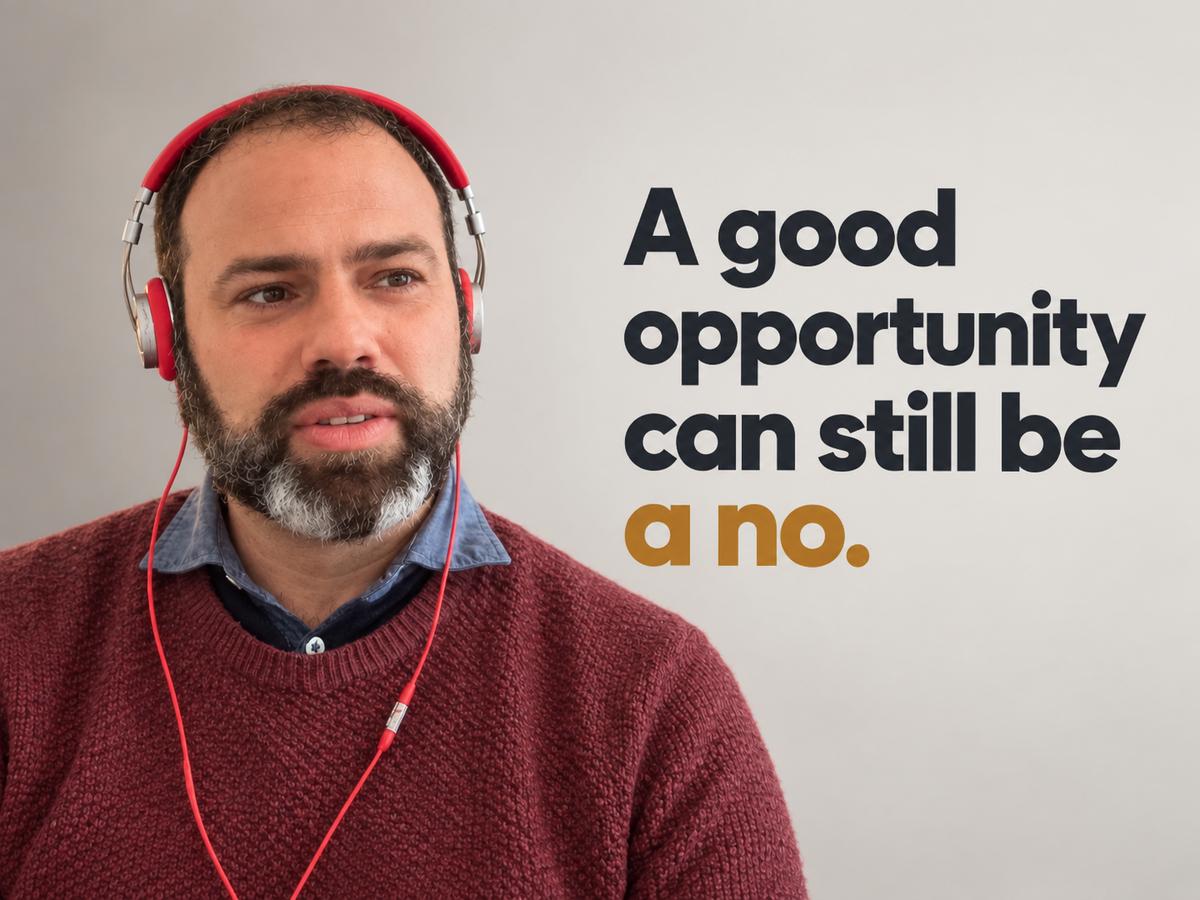
There is a weakness in our approach that I would like us to improve: sometimes we keep opportunities alive for too long when we should give a clear no.
On the technology side, we might make eight to ten direct investments and one fund investment in a year. If there is only one place for a fund, being very good may not be enough. We also have to compare an opportunity with the others we are already working on, and be realistic about what we can execute.
Liking the people can make that harder. We want the relationship to work, so we keep the conversation going even when the investment is unlikely to move forward. That uses time on both sides.
I think about it through the idea of activation energy in chemistry. A reaction needs to cross a threshold to happen. Getting close to that threshold is still not enough. An investment can be attractive and still fall short of what we need to commit.
When that is the case, a clearer decision is better than leaving someone in a holding pattern.
Attention is the first commitment
The investment process also looks different when considered in terms of time. At the beginning, an investor may give an opportunity about thirty seconds. At the end, the work may take weeks or months.
At every stage, the question is whether this is worth more time, effort and attention. The first few sentences do not have to contain an entire due diligence process. They have to make the next conversation worth having.
As the relationship develops, the commitment grows. There is more time to examine the business, test its claims and understand the people. That is the work I want to do before making a commitment that could last much longer than the funding round that introduced us.
About the conversation
Alex Felman of Felman Family Office spoke at Legends InvestHack #6 on 29 September 2026. His background in biochemistry and molecular toxicology shapes how he evaluates investment opportunities — from the evidence behind a company’s claims to the people he may work with for years. The open session ran first; the closed room afterward was for members only, and membership starts with an interview.
About Legends. Legends is an invitation-only, AI-powered private network for the people who move markets — founders, operators, family offices and investors who prefer to build among peers rather than crowds. One network, three clubs: the Global Investors Club, the Global Founders Club and the Global C-Level Club. Different rooms, one standard to enter.
Legends is not an investment platform. We do not sell deals, take commission or give investment advice.